
When Should You Replace Your Roof in Wisconsin? 7 Warning Signs
Your roof is the most expensive component on your home that you're least likely to inspect. Most Madison homeowners go years between thinking seriously about their roof — typically until something goes wrong. By that point, you're often dealing with a problem that could have been caught earlier.
Wisconsin's climate is particularly hard on roofs. Freeze/thaw cycles, ice damming, summer hail, and high winds combine to wear down even quality roofing materials faster than they would in milder climates. The 30-year shingle on your house typically delivers 22–25 years of real-world service in Wisconsin.
This guide walks through seven specific warning signs that indicate your roof needs attention. Some of these signal that a repair will buy you a few more years. Others signal that replacement should be on your near-term radar. We've tried to be honest about which is which.
If you're noticing one or more of these signs on your Madison home, the smartest first step is a free roof inspection. You'll know exactly where you stand instead of guessing — and you'll be in a better position to plan rather than react when something fails.
Sign 1 — Curling, cupping, or cracked shingles
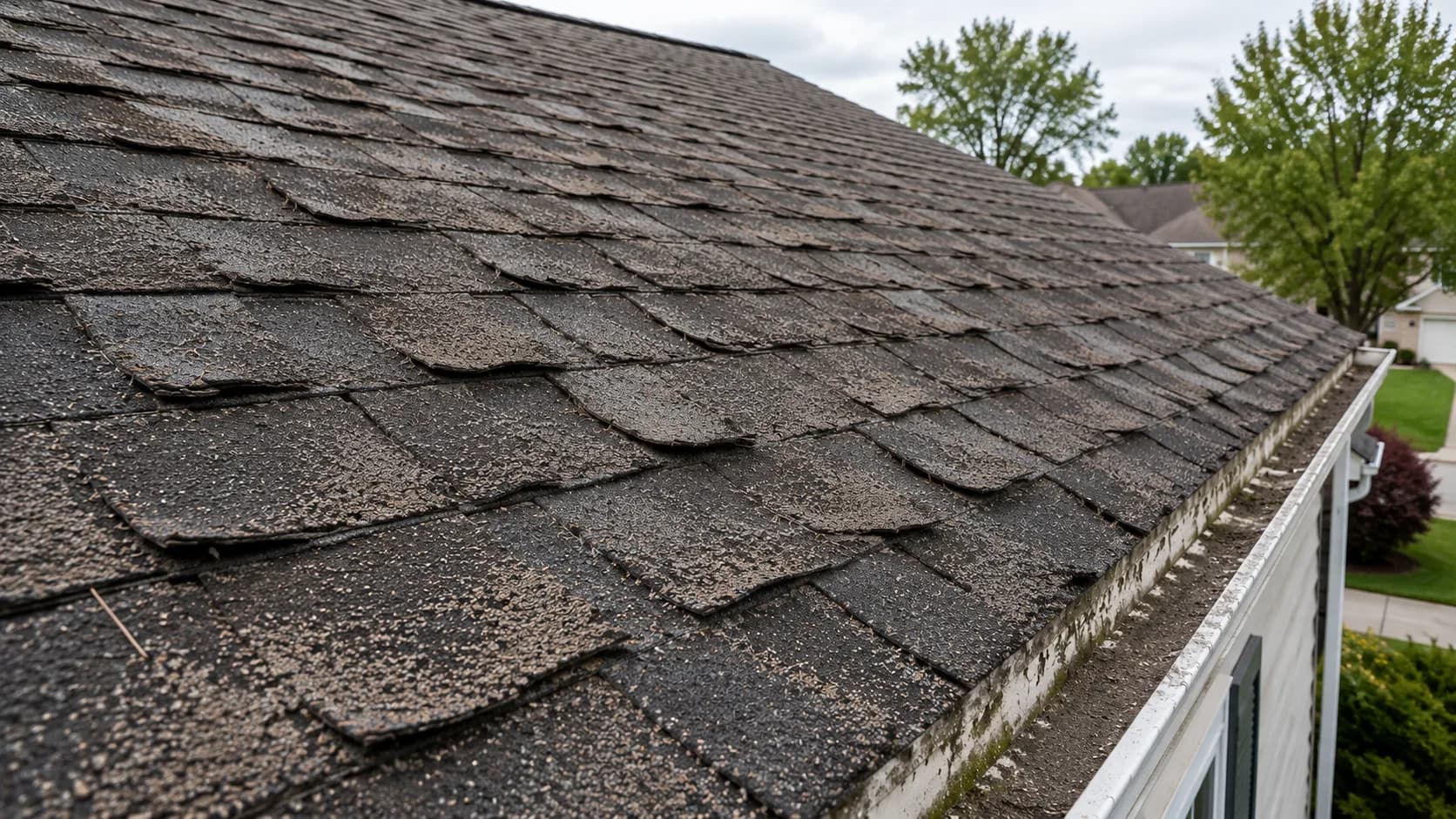
Asphalt shingles are designed to lay flat against the roof deck. When the edges start curling up or cupping inward, the protective seal between shingles is compromised. Wind, water, and ice can get underneath and accelerate damage rapidly.
What to do: A few curled shingles in one area might be repairable. Widespread curling across multiple areas of the roof typically signals end-of-life. Time for a full inspection.
Sign 2 — Granules in your gutters
The colored granules on asphalt shingles are the protective layer. They block UV rays and resist hail impact. As shingles age, they shed granules — and you'll see them collecting in your gutters and at the base of downspouts.
A little granule loss is normal, especially in the first year after installation. Heavy granule loss (visible patches of bare shingle, gutters full of granules every season) signals the shingles are past their prime.
Sign 3 — Daylight in your attic
Go up into your attic on a sunny day with the lights off. If you can see daylight coming through the roof boards, you have gaps. Even small gaps are a problem — they let in water, allow heat to escape in winter, and provide entry points for pests.
This is one of the more urgent warning signs. Schedule an inspection within 30 days.
Sign 4 — Sagging roof deck
Stand across the street from your home and look at the rooflines. They should be straight. Any sagging, dipping, or wavy lines in the roof surface signal structural problems with the deck underneath — usually moisture damage that's been working for years.
A sagging roof is not a "monitor and see" situation. Inspect immediately.
Sign 5 — Persistent water stains on ceilings
Water stains inside your home — particularly on ceilings on the top floor — almost always trace back to a roof leak. The leak might be small and intermittent (only after heavy rain or ice melt), but it's not getting better on its own.
Water finds the path of least resistance. By the time you see a stain inside, water has been working on insulation, drywall, and structural elements for some time.
Sign 6 — Higher energy bills with no other explanation
Heating and cooling costs creeping higher each season — without obvious causes like aging HVAC equipment or significant rate hikes — often signal poor attic ventilation or insulation breakdown. Both can be related to roof health.
A failing roof allows conditioned air to escape and outside temperatures to penetrate. Not the most urgent warning sign, but worth investigating.
Sign 7 — Your roof is approaching its expected service life
Wisconsin asphalt shingle roofs typically deliver 20–25 years of service. Metal roofs deliver 40–60. Tile and slate can go longer.
If you don't know your roof's age — and many Madison homeowners don't, especially if they bought the home from a previous owner — that's a reason to schedule an inspection. Knowing where you stand on the lifecycle helps you plan rather than react.
What to do if you're seeing multiple signs
If you're seeing one or two of these warning signs in isolation, you might have years of life left in your roof — particularly if the signs are minor and the rest of the roof looks healthy. If you're seeing three or more, replacement should be on your near-term radar.
The smartest move at any sign of concern is a free inspection. We'll climb the roof, document the actual condition, and give you an honest assessment. No pressure, no sales pitch — just a clear picture of where your roof stands and what to plan for.
If a replacement is in your near future, our Madison roof replacement pricing breakdown walks through realistic 2026 cost ranges, financing, and the five biggest factors that drive your specific number. And if you'd like to lock in long-term protection after the install, take a look at The Defender Shield — our annual home protection plan covering roof, gutters, and storm response for one yearly fee.