
Roofing Material
Metal Roofing in Madison
Standing-seam metal sheds snow well, lasts 50+ years, and resists hail in ways asphalt can't match. Costs 2–3× asphalt up front; pays back over decades.
When metal is the right call
You plan to stay in the house long-term
Metal's lifespan advantage only matters if you're around to capture it. If you're moving in 5 years, asphalt is almost always the better financial choice.
Steep or complex roofs
Standing-seam handles steep pitches and unusual geometries cleanly. The panels run continuously top-to-bottom, so there are fewer failure points.
Snow management is a real problem
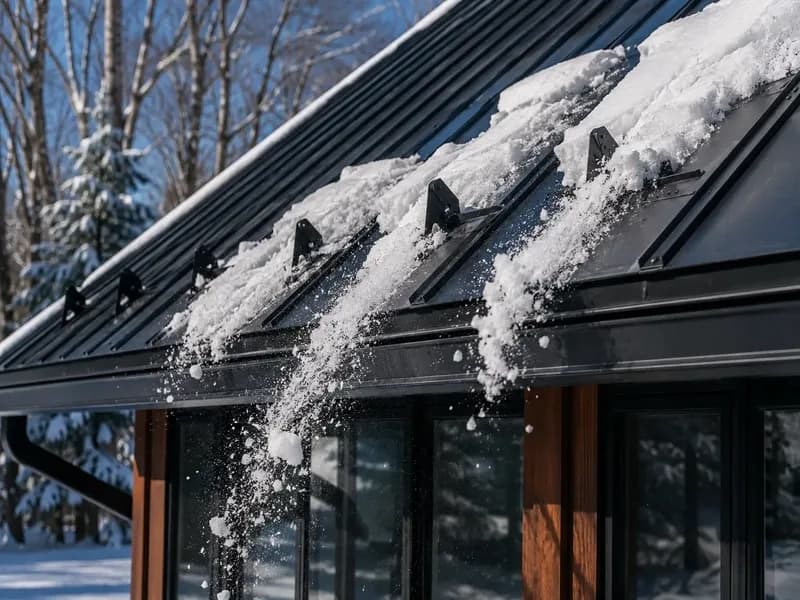
Metal sheds snow before it builds up to ice-damming weight. North-facing slopes that always ice over in February stop being a problem. We add snow guards above doorways and walkways to control where the snow lands.
Hail history in your area
Metal dents under hail but rarely fails. Asphalt cracks and loses granules and sometimes needs full replacement after a serious hailstorm. Some insurers offer real discounts for metal roofs in hail-prone Wisconsin zones.
What we install
Standing-seam panels
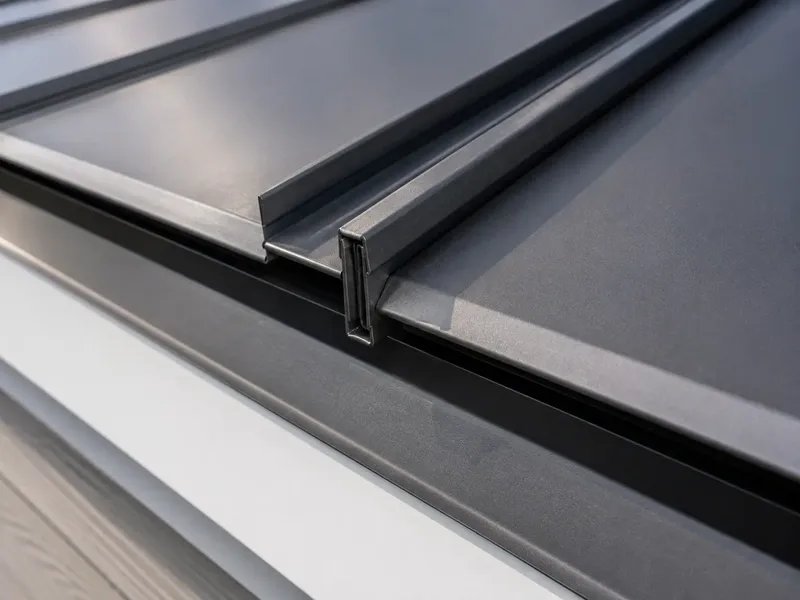
Vertical panels with raised seams, mechanically locked or snap-locked. The default for residential metal roofing — clean look, hidden fasteners, best longevity.
Stamped metal shingles
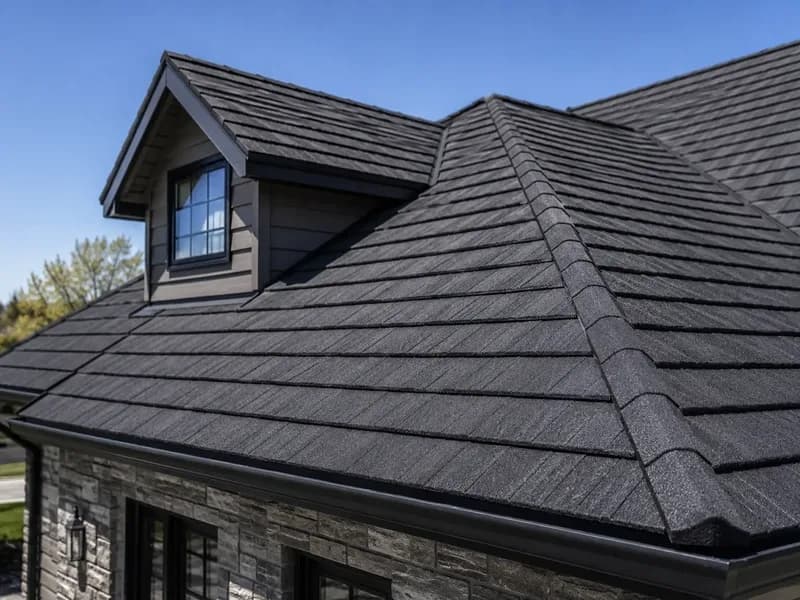
Metal panels stamped to look like shake, slate, or tile. Useful when standing-seam doesn't fit the architecture — historic homes, certain HOA contexts.
Exposed-fastener panels (limited use)
Lower-cost agricultural-style panels with screws through the panel face. We install these on outbuildings and pole barns but rarely on homes — the exposed gaskets become the limiting factor on lifespan.
Cost and longevity
Standing-seam metal runs $1,000–$1,500 per square installed for standard panel systems, higher for premium colors and finishes. A typical Madison home that costs $13,000 in asphalt costs $26,000–$40,000 in metal. The math is real — but so is the lifespan: 50+ years of service vs. 22–28 for asphalt.
Cost-per-year-of-service is the more useful metric. Asphalt at $13,000 over 25 years is about $520/year. Metal at $30,000 over 55 years is about $545/year. The difference shrinks once you account for not paying to replace it once or twice in between. Add the insurance discount where applicable and metal often comes out ahead over the long run.
What metal doesn't fix
Metal isn't a bypass for the rest of the roof system. Underlayment still matters, ice and water shield still matters, ventilation still matters, flashing details still matter. We see metal roofs that fail at 15 years because the install rushed past the basics. Done right, the panels last 50+ years; done wrong, you've paid 2–3× and gotten asphalt-equivalent service life.
Frequently asked questions
- Will my insurance company give me a discount for metal?
- Sometimes. It depends on the carrier, the policy, and the hail history of your zip code. Ask your agent before committing — get the discount amount in writing if it's offered. In some Wisconsin zones the discount is meaningful; in others it's nominal.
- Are metal roofs noisy in rain?
- Not on a properly installed residential metal roof. The decking, underlayment, attic insulation, and ceiling all sit between you and the panel — by the time sound reaches the living space it's no louder than asphalt. The 'rain on a tin roof' association comes from uninsulated barns and outbuildings.
- Can metal go over my existing shingles?
- Some standing-seam systems can be installed over an existing layer of asphalt — but we recommend tearing off anyway. Hidden decking damage, voided manufacturer warranties, and trapped heat all argue for tear-off. If cost is the only reason to consider a layover, asphalt is the better choice.
- Will my HOA approve metal?
- Depends on the HOA. Some Madison-area subdivisions explicitly approve metal, some require board approval, and some prohibit it. We check before quoting. Stamped metal shingles (slate or shake profile) get approved more often than standing-seam in tradition-heavy neighborhoods.
Related services
Roof Replacement in Madison and Dane County
Full tear-off, decking inspection, ice and water shield well past the eaves, synthetic underlayment, and architectural shingles or standing-seam metal — the system, not just the top layer.
Learn more
Asphalt Shingle Roofing in Madison
Architectural asphalt shingles are the right call for most Wisconsin homes. 30–50 year manufacturer warranties, good wind and impact ratings, broad color choice, predictable cost.
Learn more
Free Roof Inspection in Madison, WI
Don't wait until you have a leak. Most roof problems are visible long before they cause damage inside your home — but only if someone's looking. Our free 30-point inspection gives Madison homeowners a clear, honest picture of what's working, what's wearing, and what to plan for.
Learn more
Ready for a free estimate?
Tell us about the project. We'll come out, take a look, and put a written estimate in your hand within a week.